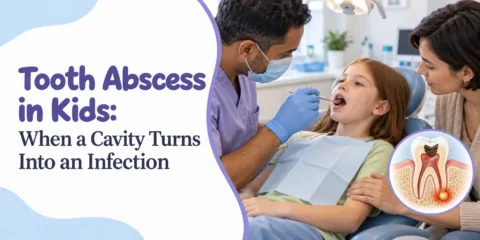
Tooth Abscess in Kids: When a Cavity Turns Into an Infection
A small pimple beside your child’s tooth can be easy to dismiss, especially if they are still eating and playing. But that bump, a worsening toothache, or a swollen cheek may point to a child tooth abscess.
An abscess is a pocket of pus from a tooth infection. It needs urgent dental attention, even when pain is mild. Knowing which signs need a dentist and which need emergency medical help can keep you from losing time.
Is a Tooth Abscess in Children an Emergency?
A suspected abscess needs urgent dental care. Do not wait for severe pain or fever.
When to Contact a Dentist Urgently
Call today about a gum bump, pus, ongoing tooth pain, or swelling near a tooth. Report when symptoms started and any fever.
A swollen cheek from a tooth infection needs prompt assessment. If facial swelling is worsening, your child seems very unwell, or you cannot obtain prompt dental care, seek urgent medical assessment.
Ask about urgent toothache care rather than booking a routine checkup.
When to Get Emergency Medical Help
Go to an emergency department for:
- 1. Trouble swallowing or speaking.
- 2. Swelling around an eye or vision changes.
- 3. Major mouth swelling or difficulty opening the mouth.
Call for breathing difficulty. Do not wait for an appointment.
The NHS guide to dental abscesses explains these warning signs and why an abscess will not go away on its own.
How Can a Cavity Become a Tooth Infection?
A cavity begins as damage to the tooth’s hard outer layer. Without treatment, the hole can deepen, allowing germs to reach the soft inside containing nerves and blood vessels.
Infection can then spread around the roots and form a pocket of pus. A cracked or injured tooth can also become infected, even without an obvious cavity.
A small cavity and an abscess need different care. Early decay may need a filling, while an abscess needs treatment that removes the infection’s source. Exploring care for childhood cavities early can help prevent more extensive damage.
What Signs Suggest a Tooth Abscess?
Young children may show discomfort through behavior. A dental exam confirms the cause.
Tooth Pain, a Gum Pimple, or a Bad Taste
Watch for:
- 1. Pain when biting or chewing.
- 2. Swollen, tender gums beside a tooth.
- 3. A white or yellow gum bump.
- 4. A bad taste or pus draining into the mouth.
A gum boil near your child’s tooth may be an opening where infection drains. Less pressure can mean less pain, but it does not mean the tooth has healed.
Changes Younger Children May Show
Your child may chew on one side, refuse crunchy foods, wake at night, or rub their cheek. Suddenly avoiding a favorite apple may signal tooth pain.
What Helps Before Tooth Abscess Treatment?
Call for care first, then focus on comfort while following the dental team’s advice. Home care cannot cure an abscessed tooth.
- 1. Offer soft foods such as yogurt, eggs, or mashed potatoes.
- 2. Encourage drinking if your child can swallow comfortably.
- 3. Brush gently with a soft toothbrush.
- 4. Avoid foods and drinks that trigger pain.
- 5. Use suitable children’s pain medicine according to the label or professional advice.
Check age and weight instructions; ask a pharmacist if unsure. Do not give aspirin to a child unless specifically prescribed.
Never squeeze or pierce a gum bump. Do not use leftover antibiotics or place aspirin against the gums. If swelling increases or your child becomes unwell, seek further assessment rather than waiting for the medicine to work.
How Is an Abscessed Baby Tooth Treated?
The dentist checks the tooth, gums, swelling, and your child’s health. X-rays may help show damage around the roots.
Can the Baby Tooth Be Saved?
Sometimes treatment inside the tooth can remove damaged tissue and preserve the tooth. However, not every treatment to save baby teeth is suitable once an abscess has formed.
Dr. Mauro can explain what the examination shows and guide parents through the options. The decision depends on the damage, infection, roots, and how close the tooth is to falling out naturally.
If the tooth cannot be safely repaired, removal may be needed. Depending on which tooth is lost and your child’s development, the dentist may discuss keeping space for the adult tooth.
Waiting for an infected baby tooth to fall out can allow the infection to spread. Baby teeth still support eating and hold space as children grow.
Will Antibiotics Be Enough?
Antibiotics may help when infection spreads or causes symptoms such as fever. They do not replace treatment of the infected tooth, and they are not needed in every case.
Ask what treatment addresses the source and when your child should be checked again.
How Can You Prevent Another Tooth Infection?
Prevention starts with treating cavities before they deepen. Help your child brush twice daily with fluoride toothpaste and clean between touching teeth.
Limit frequent sugary snacks and drinks, keep recommended checkups, and have broken teeth examined. Dr. Mauro can help parents identify brushing difficulties or snack habits that increase decay risk and explain practical changes suited to their child.
Why Choose Tiny Teeth Pediatric Dentistry?
Tiny Teeth Pediatric Dentistry helps families in Mineola understand tooth pain, swelling, and treatment choices. Dr. Mauro guides parents through findings and explains care based on each child’s needs. If you notice a gum bump or swollen cheek, contact the practice for guidance about an urgent assessment and next steps.
Questions About Tooth Abscesses in Kids
Your child’s symptoms determine how urgently they need care.
Can a tooth abscess be painless?
Yes. A child tooth abscess can cause little pain, especially when pus drains through a gum bump. The infection may still be present. Arrange an urgent dental assessment even if your child eats and plays normally.
What if the gum bump bursts?
A burst gum bump can release pus and ease pressure, but it does not remove the infected tooth tissue. Do not squeeze it or cancel the dental visit. Call the dentist and report any new swelling, fever, or pain.
Can antibiotics cure the abscess?
Antibiotics alone usually cannot cure an abscessed baby tooth because the source remains inside the tooth. A dentist must treat that source and decide whether antibiotics are needed for spreading infection.
Must an abscessed tooth come out?
Not every abscessed baby tooth needs removal. The dentist checks the damage, infection, roots, and time until the tooth would fall out. Some teeth can be treated inside; others need removal to stop infection.
What if the dentist is closed?
Call the dental office and follow its emergency instructions, or contact an emergency dentist. Seek emergency medical care for trouble swallowing, eye swelling, or major mouth swelling; call emergency for breathing trouble.